Elementor #16560

Magma Liquid-Liquid Mixer

Low Shear Liquid-Liquid Mixing

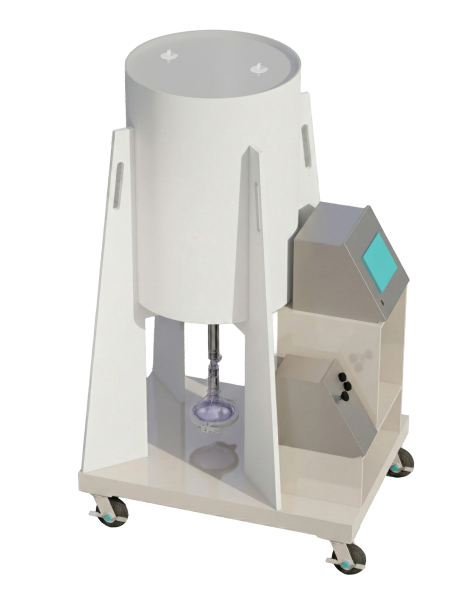
The Magma Advanced Pumping System (APS) can be used for low shear mixing of readily miscible liquids without the use of an impeller by providing gentle agitation of the liquid in the process vessel.  The mixing is driven by a diaphragm pump mounted on the bottom of the vessel where gravity allows liquid to drain into the pump at a controlled rate to fill it then air pressure is used to push the liquid at a controlled rate out of the pump to create a jet of liquid that disrupts the liquid up to the liquid surface.  The 200 liter mixer under final development features use of the part #APSP-PH860-SU (Magma APS-860D Dome Pump Head) which has a volume of 860mL, with the silicone diaphragm part #APSP-DIA860D (Magma APS-860 Dome Diaphragm) secured between the two pump halves.  For liquid-liquid mixing applications, it is an economical, low energy system because the mixing process is facilitated by the diaphragm pump driven by compressed air and gravity. With the designed configuration, the Magma mixer can be completely drained of liquid after mixing.  With the Magma APS weight control option, an automated mixing and dilution system can be configured.  Additionally additional sensors can be added for analytics such as temperature and pH measurement.  An illustration is shown here:
Magma Liquid-Liquid Mixier
Low Shear Liquid-Liquid Mixing
Covered by U.S. Patent No. 7,972,058 for Apparatus and Method For Mixing with Diaphragm Pump

The rendition of the single use product under final product development and the single-use assembly insert is shown below.  The single-use bag-style product contact component has a variety of addition ports and ports for sampling or probes and can be provided gamma-irradiated with a sterile claim if needed.

Magma Liquid-Liquid Mixier
Single-Use Assembly for the Magma Mixer

Experiments were conductied to outline the mixing visualtion and efficiency, and is described in the following section.

Investigation of Mixer Efficiency Visually and By Measure of Conductivity Convergence in an Aqueous System

In order to measure the performance of the CP Biotools Magma Mixer, experiments were designed for both qualitative and quantitative testing.

The 200-liter vessel used for conducting the experiments, which is the same one that will hold the single-use bag-style insert, was outfitted with the Magma APS single-use 860mL pump head and a tubing assembly to simulate the proposed design.  This assembly was attached to a hose barb mounted to the bottom opening of the vessel, as shown in Figure 1, which is a picture of the test setup.

Magma Low Shear Liquid-Liquid Mixer - outside view
Figure 1

Experimental Procedure Overview

For the testing, four different experiments were conducted to evaluate performance across a range of working volumes in addition to a control with the pump turned off (no mixing).  The experiments are:

  1. Control with no mixing
  2. Full 200-liter working volume
  3. 150-liter working volume to test the performance if the vessel is not full
  4. 50-liter working volume to test the performance at this lowest suggested limit, because below 50 liter there is proposed smaller mixer to complement the 200-liter mixer in development

For the Magma pump operation, no vacuum was used to draw liquid into the pump- the liquid pressure head facilitates a gravity drain into the pump.  The Magma Pump Control System, use regulated compressed air to drive the liquid out of the pump head.  The flow in/out of the pump is controlled by the flow control valves on the control system.

The pump cycle time^ for the three experiments was as follows:

  1. 200 liter: Liquid out = 4.3 sec /  Liquid in = 6.1 sec for a total of 10.4 sec cycle for an average flow rate of 9.9 liter/min
  2. 150 liter: Liquid out = 4.3 sec /  Liquid in = 7.3 sec for a total of 11.6 sec cycle for an average flow rate of 8.9 liter/mi
  3. 50 liter: Liquid out = 4.3 sec /  Liquid in = 9.2 sec for a total of 13.5 sec cycle for an average flow rate of 7.6 liter/min

^ less pressure head results in a longer fill time but this can be adjusted with the flow control valve, however for these experimental purposes it was not adjusted for the different volumes

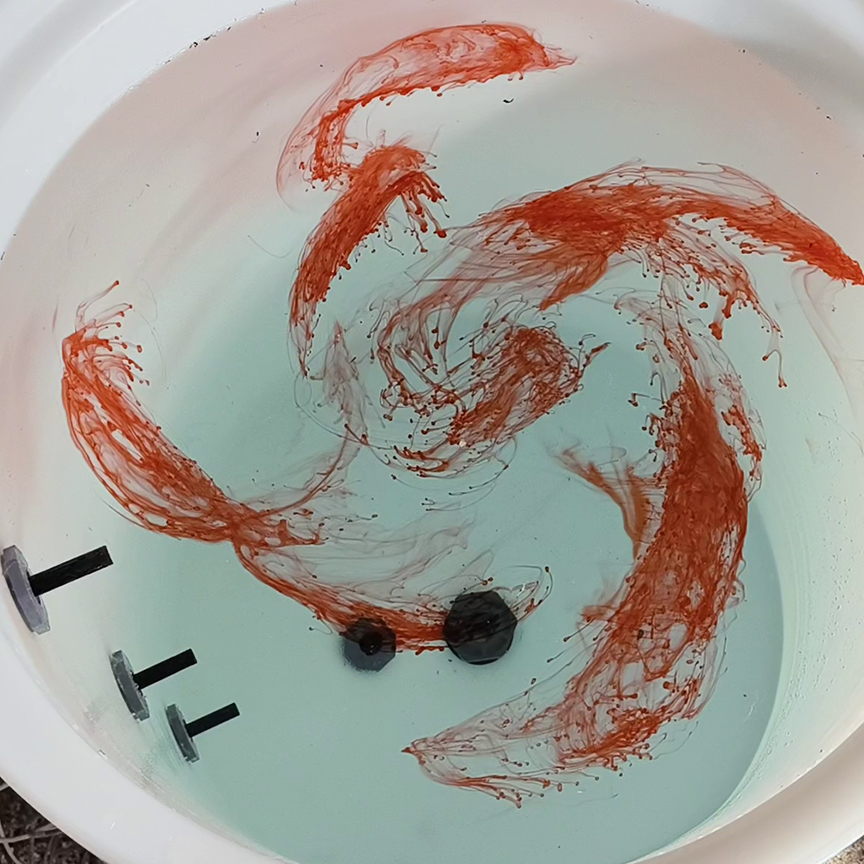
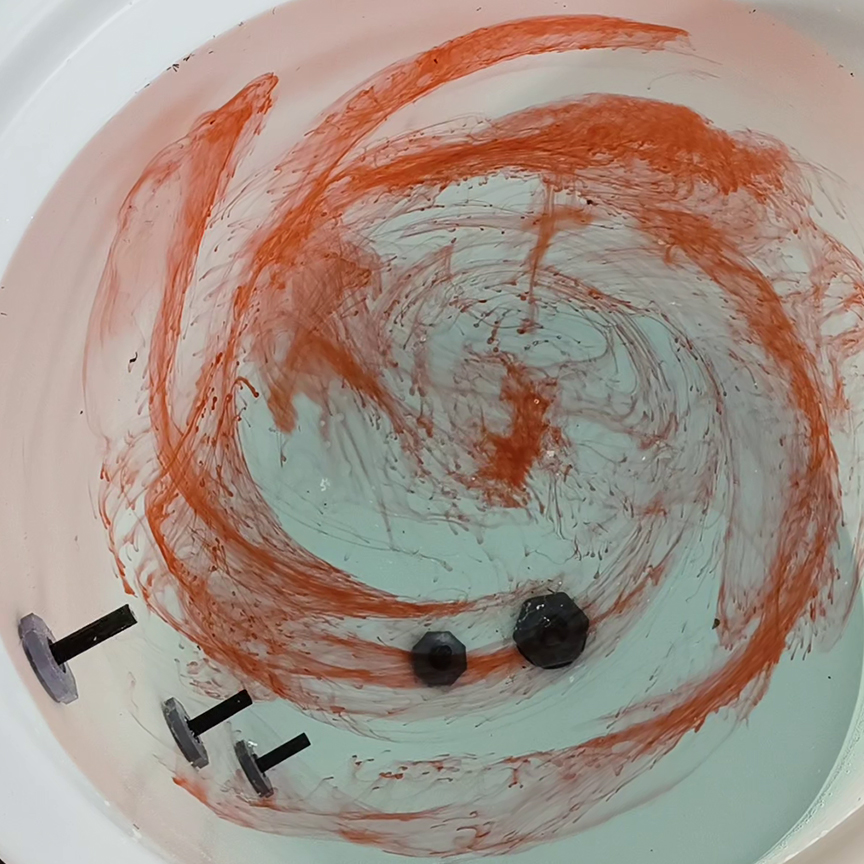
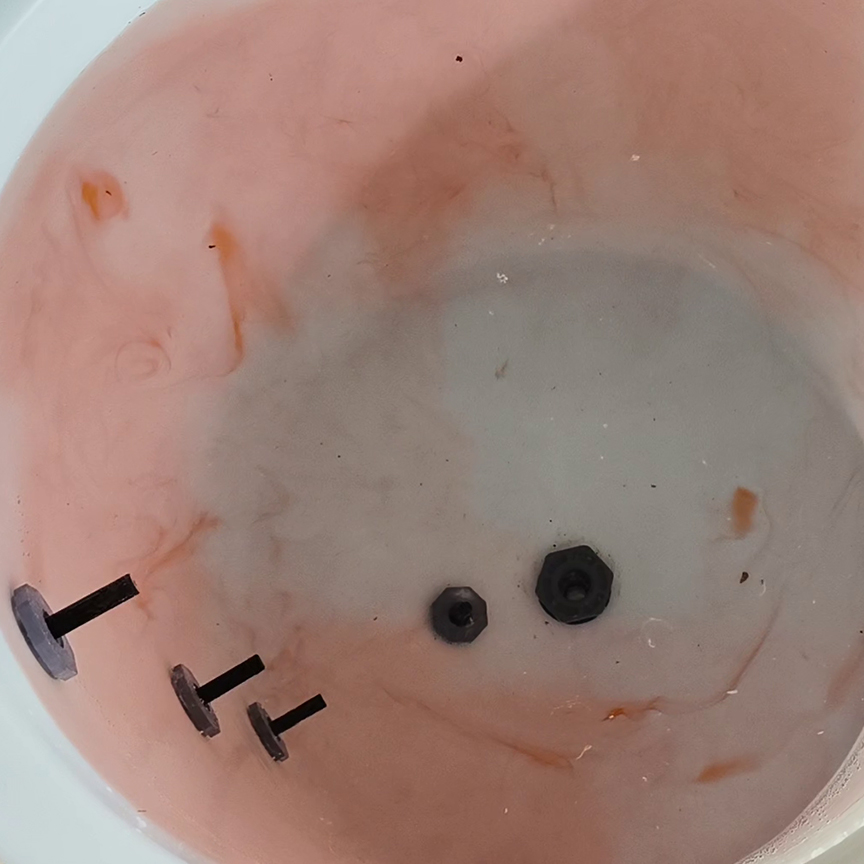
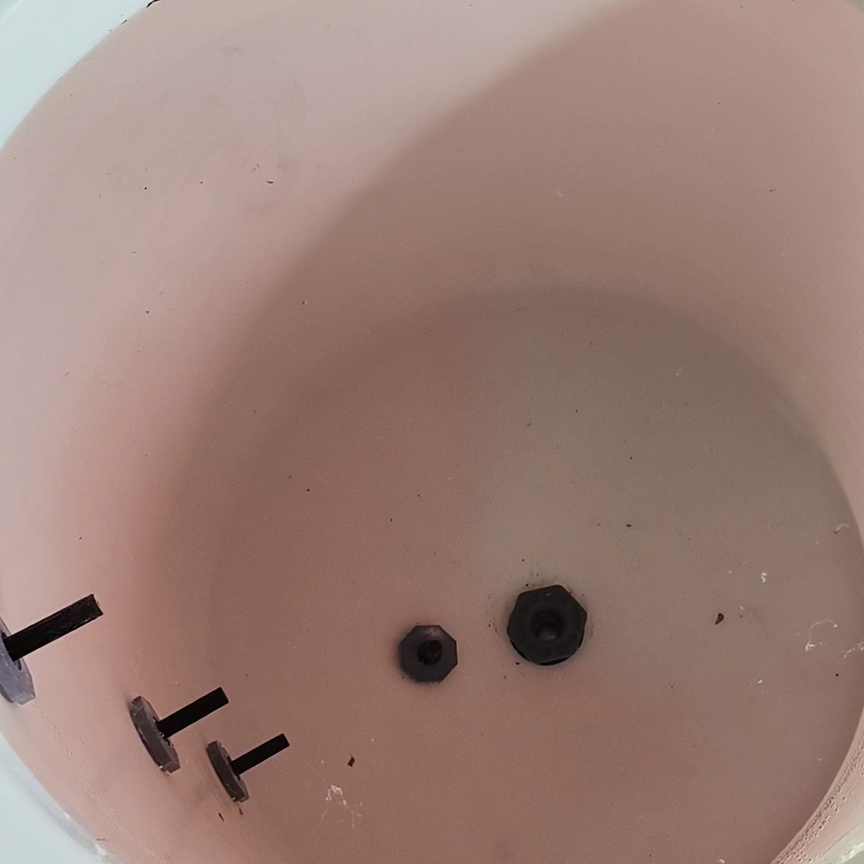
For the qualitative testing, 5 drops of red food dye were dripped into the top surface of the liquid with four drops around the edge and one in the center. The pump was turned on before the drops were added and the mixing action was filmed to visualize the dispersion.

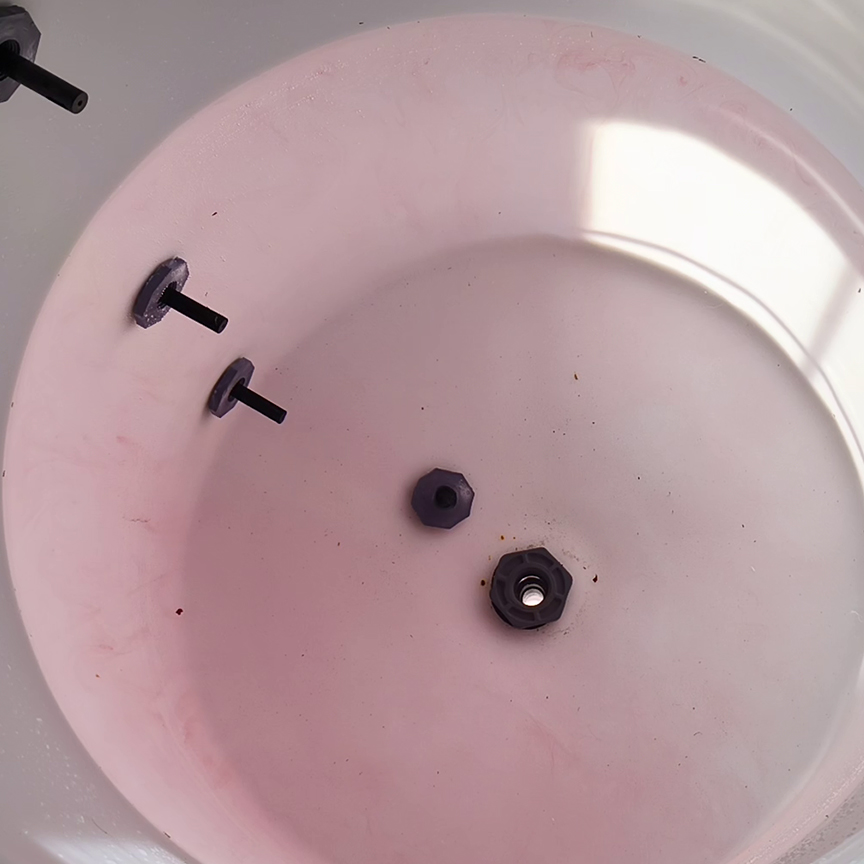
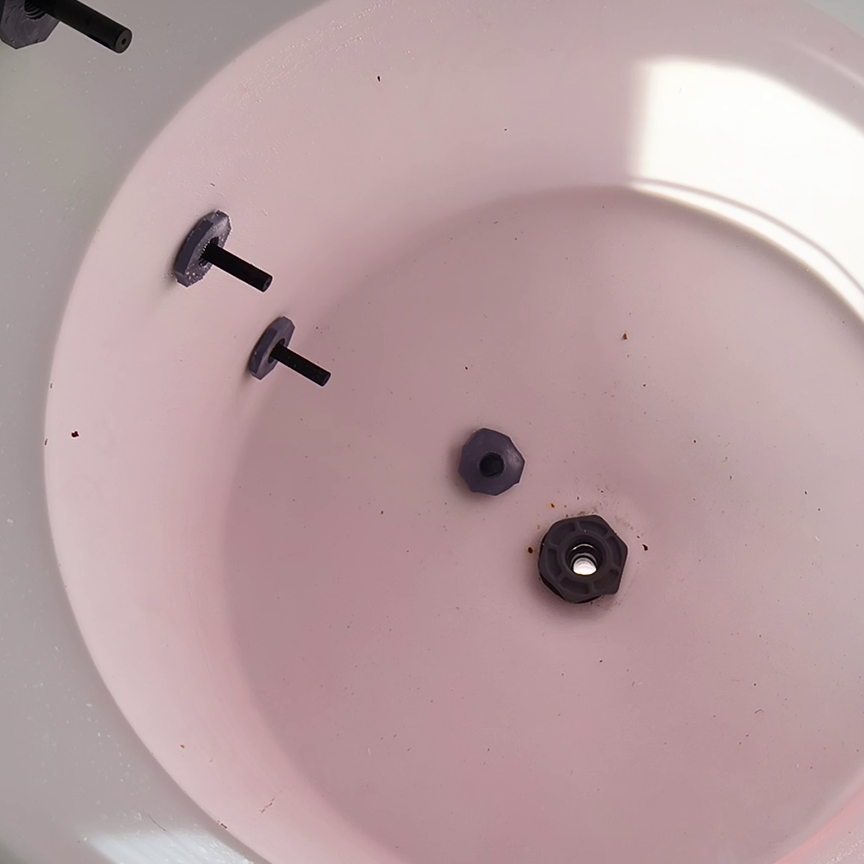
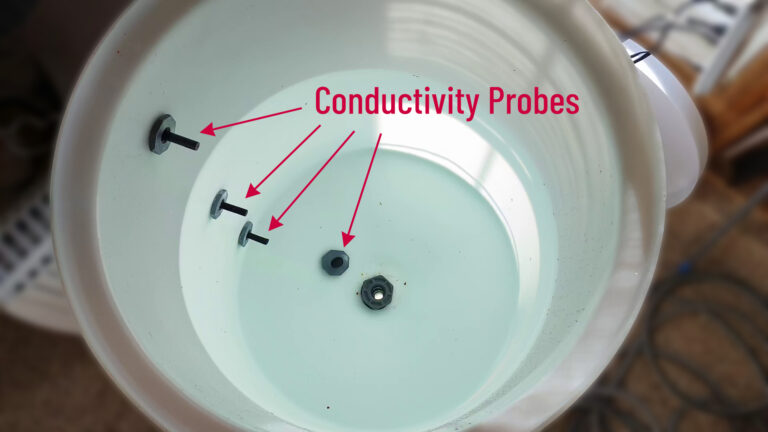
For the quantitative testing, four conductivity probes were inserted into the vessel through bulkhead fittings that were inserted to the vessel wall through holes there were drilled into the vessel wall (Figure 1).  There were three on the side wall and one placed in proximity to the pump inlet / outlet (Figure 2). 

Magma Mixer Conductivity Probes Labeled
Figure 2

High-concentration potassium chloride (KCl) was poured into the top of the vessel, and the conductivity was measured versus time to determine the time until the conductivity was uniform in the vessel. 

Results of Qualitative Testing

Shown below are still-captures at the increments noted at time=0, after 1.5 minutes, and 3 minutes (except the 50-liter working volume only has 1.5 minutes) for each of the four experiments.

Control
Time = 0Time = 1.5 minutesTime = 3 minutes
Results of Qualitative Testing Time 0Results of Qualitative Testing Time 1.5 minutesResults of Qualitative Testing Time 3 minutes
200L Full Working Volume
Time = 0Time = 1.5 minutesTime = 3 minutes
Results of Qualitative Testing 200 Time 0Results of Qualitative Testing 200L Time 1.5 minutesResults of Qualitative Testing 200L Time 3 minutes
150L Working Volume
Time = 0Time = 1.5 minutesTime = 3 minutes
Results of Qualitative Testing 150L Time 0Results of Qualitative Testing 150L Time 1.5 minutesResults of Qualitative Testing 150L Time 3 mintues
50L Working Volume
Time = 0Time = 1.5 minutes
Results of Qualitative Testing 50L Time 0Results of Qualitative Testing 50L Time 1.5 minutes

As seen in the pictures, the control indicated some swirling of the dye, but does not indicate any significant mixing.  In the 200L and 150L experiments, the dye appears to be dispersed by the 3-minute time mark.  The 50L experiment, the dye appears to be dispersed within the 1.5-minute mark.

Quantitative Testing Results

For each of the four experiments, the concentrated KCl was prepared as noted then added to the vessel over the noted time.  Descriptions for each experiment:

  1. Control with no mixing experiment- Solution prepared by adding 4 x 8oz bottles (total 32 oz) of 3M KCl into two 1-gallon jugs (2 bottles / 16oz per jug) and then loaded it into the top if the vessel with 30-second pour time (both gallons were poured at the same time).
  2. 200L experiment- The pump was turned on. Solution prepared by adding 4 x 8oz bottles (total 32 oz) of 3M KCl into two 1-gallon jugs (2 bottles / 16oz per jug) and then loaded it into the top if the vessel with 25-second pour time (both gallons were poured at the same time).
  3. 150L experiment- The pump was turned on. Solution prepared by adding 3 x 8oz bottles (total 24 oz) of 3M KCl into two 1-gallon jugs (2 bottles / 16oz per jug in one jug; 1 bottle / 8oz in one jug) and then loaded it into the top if the vessel with 25-second pour time (both gallons were poured at the same time).
  4. 50L experiment- The pump was turned on. Solution prepared by adding 1 x 8oz bottle (total 8 oz) of 3M KCl into a 1-gallon jug and then loaded it into the top if the vessel with a 25-second pour time for the one gallon.

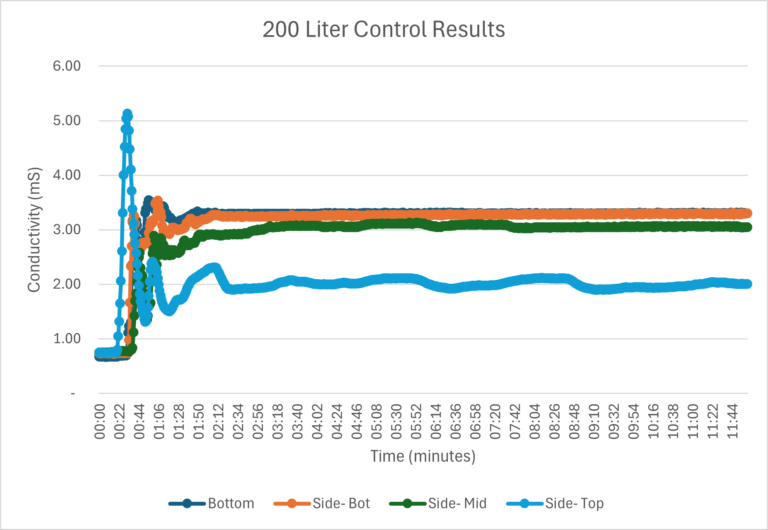
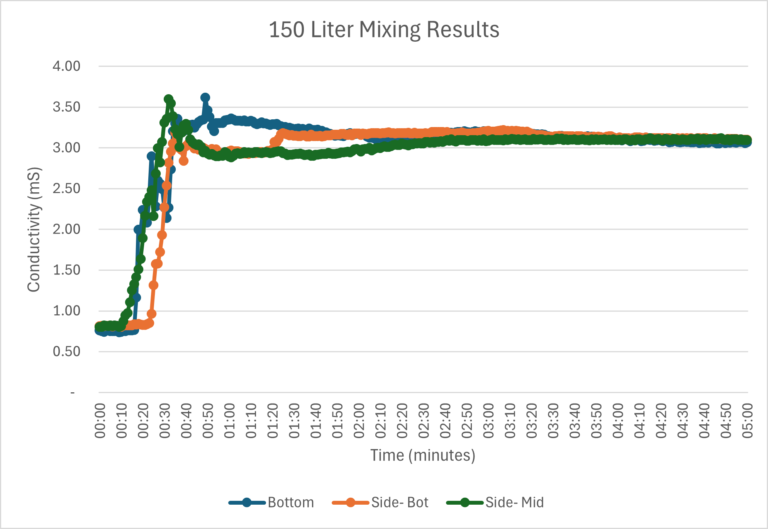
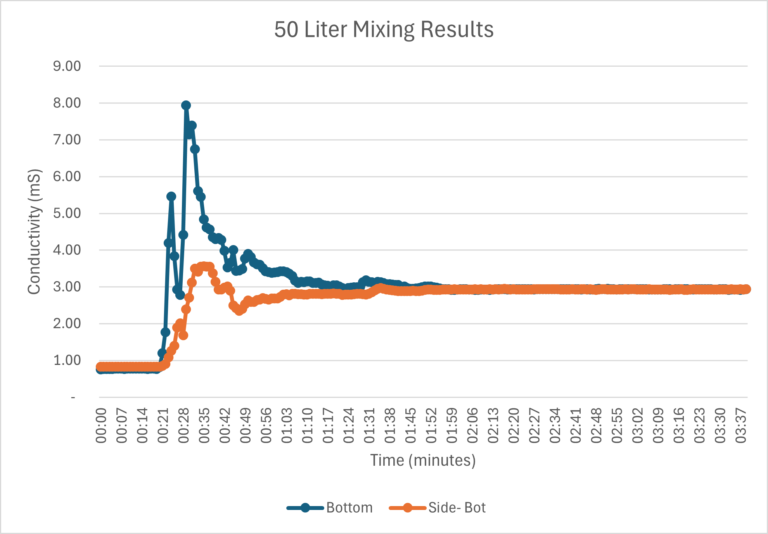
The results are shown in the following graphs of conductivity versus time, and the legend indicates the probe location.

200L Control Results
As observed in the graph, there is an initial spike of the top conductivity sensor as the solution was poured into the vessel. After the spike, the concentrated KCl moves to the bottom and the middle and top sensor are lower than the bottom and the side-bottom. After about 3 minutes the conductivity reaches a equilibrium type of condition and no significant changes occurs through the remaining time shown on the graph area. This demonstrates what would occur in a storage vessel with the solution with no mixing.
200 Liter Mixing Results
In the 200-liter mixing experiment, there is a spike as the solution is poured into the top of the vessel with the top and middle conductivity sensors. After that spike it appears the concentrated KCl solution drifts towards the bottom and away from the top sensor. There is then an increase in the bottom and the side-bottom sensor. After 3 minutes 45 seconds all the sensors converge to about 3 mS shown on the graph.
150 Liter Mixing Results
In the 150-liter mixing experiment, the top sensor is not wetted so it is omitted. There is a spike in the middle sensor as the solution is poured into the top of the vessel. After that spike it appears the concentrated KCl solution drifts towards the bottom and away from the middle sensor and the bottom one spikes followed by the side-bottom. There is then an increase in the bottom and the side-bottom sensor. After 3 minutes 30 seconds all the sensors converge to about 3 mS shown on the graph.
50 Liter Mixing Results
In the 50-liter mixing experiment, the top sensor and middle sensor are not wetted so they are omitted. There is a spike in the bottom sensor as the solution is poured into the top of the vessel and the concentrated KCl solution drifts towards the bottom. After 2 minutes, the sensors converge to about 3 mS shown on the graph.

Additional Insight

To further demonstrate a vessel with no mixing versus the gentle, low-shear mixing, the control experiment was continued for 16 minutes, then the pump was turned on.  With the same time frame as the 200-liter experiment, in under 4 minutes, sensors converge to about 3 mS indicated effective mixing.